
Led the creation of Navan’s new AI conversation-based business travel assistant, from zero to launch.
The growth opportunity
Navan manages travel and expense for companies. But nothing in it was built for the business person who travels frequently.
~$400B
A user we didn’t have.
They travel far more than everyone else, and have different needs than our regular traveler does. No single product caters to all of them.
They were already paying for this.
Some already paid human assistants to book and manage their trips. Demand was proven, in a market we had never served.
We already owned the infrastructure.
A decade of supplier integrations, booking rails, inventory and pricing.
And AI became genuinely capable.
Our in-house AI support chat already worked. Taking it further was the obvious next step, and the window to be first.
My role
User research
- 10+
- trips a year
- Any level
- from IC to executive
- 30 – 55
- age range
The users’ main pain and needs
Weaving it together is the challenge
“The actual travel isn’t stressful, it’s weaving it all together.”
They wanted a planner that holds flights, hotels, restaurants and meetings in one place.
No filter has ever supported their needs
“A hotel with a 24-hour gym.”
“A room with blackout curtains.”
Highly specific, personal needs.
Rewards are often the top priority
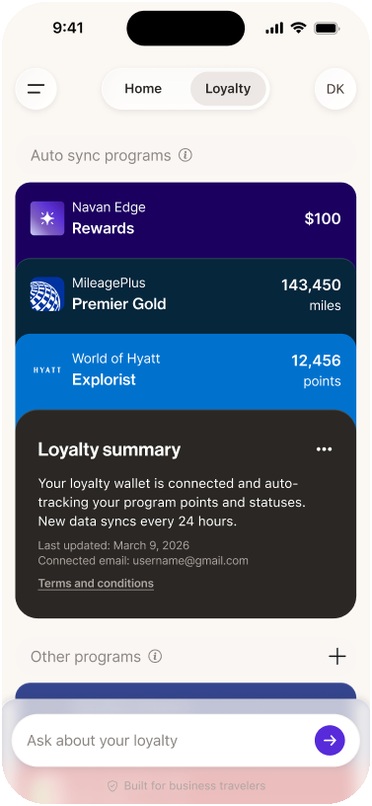
Loyalty plans and rewards are how they make a trip more comfortable and profitable, but they have too many programs to track and optimize.
Plans change constantly
One delayed flight makes the hotel, the car, the restaurant and the meetings wrong all at once. Bookings have to stay flexible.
26 virtual sessions · two 90-minute focus groups, 11 users
What we decided to build
A conversational AI travel assistant that searches and books travel for frequent business travelers.
Because a conversation is the only interface that can hold all of their specific needs in one place and turn them into an ultra-personalized result. We wanted them to feel like they had a real travel agent who knows them.
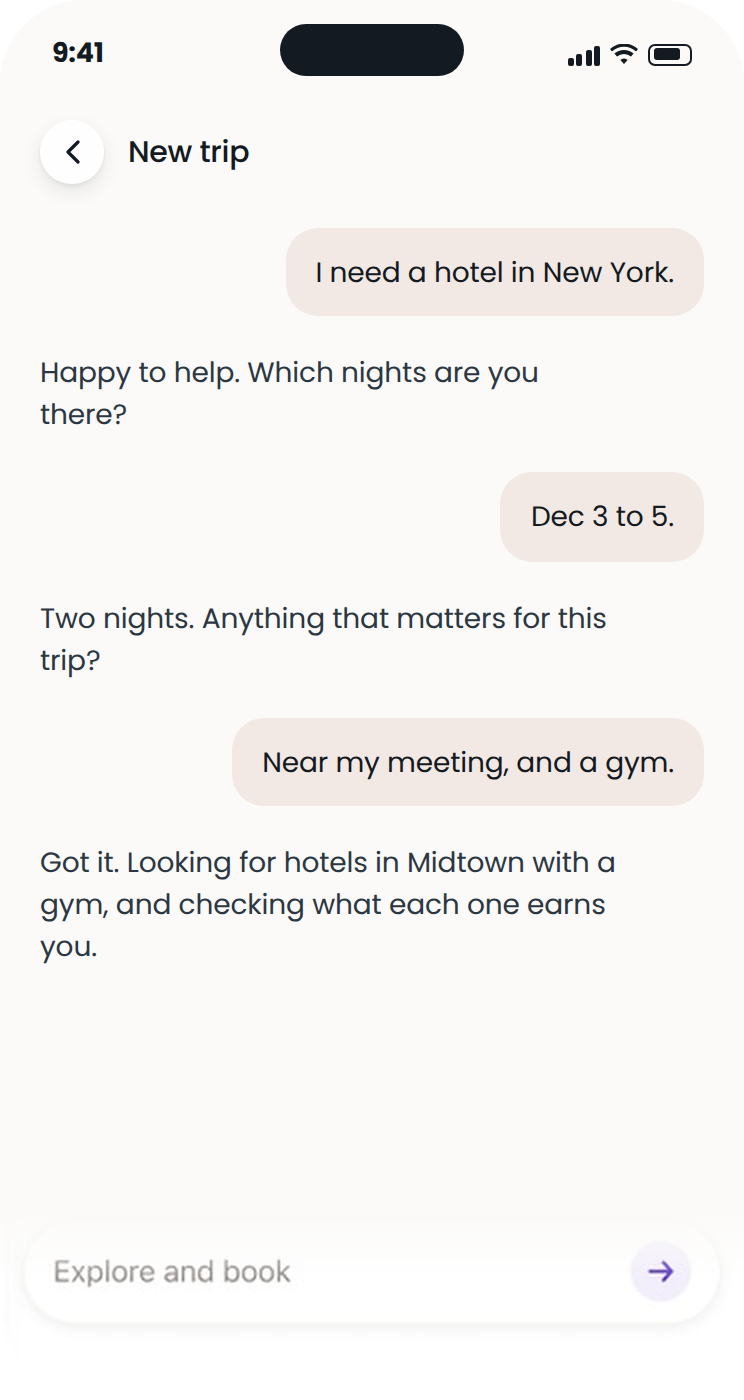
The problem
How might we fit a booking platform inside a conversation?
A conversation is linear and progressive: one thing at a time, everything above it scrolling away. A booking platform is dense and comparative. The challenge here was the ambiguity: no segment, no pattern, and no agreed definition of what good would look like.
A conversation · linear and progressive
A booking platform · dense and comparative
We gave information a depth layer
A chat has one axis, so depth and history compete for the same space. We created a dive-deep layer.
Vertical is time.
The conversation in chronological order. What you asked, what it answered, where you are.
Horizontal is depth.
Flip sideways into any item without leaving the thread, and come back exactly where you were.
Time ↓
Depth →
We launched a new AI booking experience
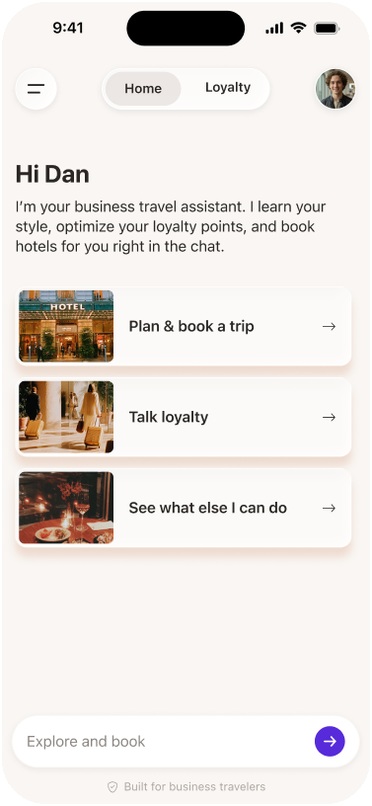
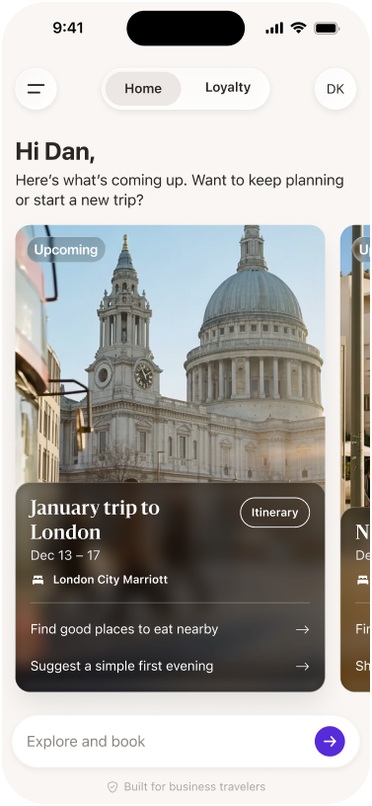
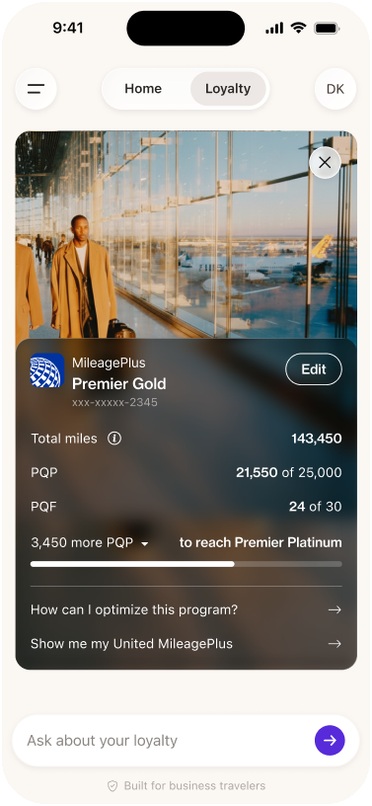
A home for all trips and loyalty plans
March 2026, iOS, US: homepage, hotels, itinerary, loyalty wallet and profile.
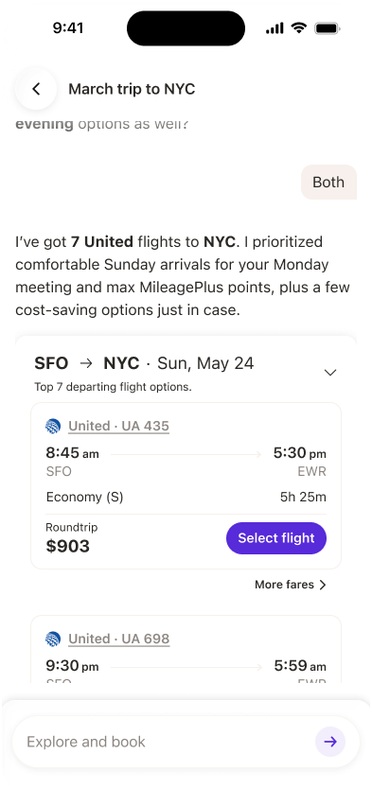
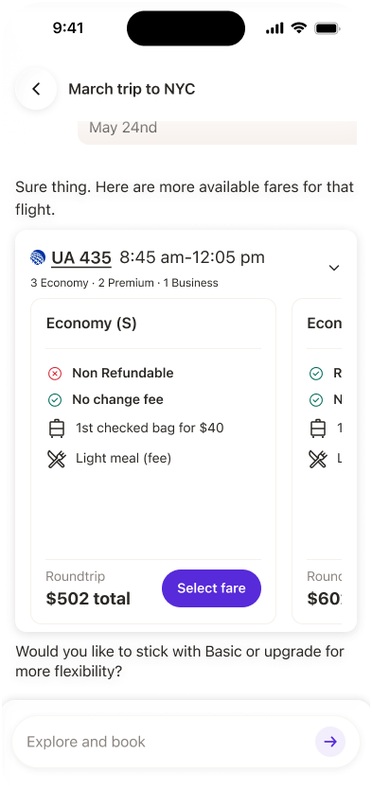
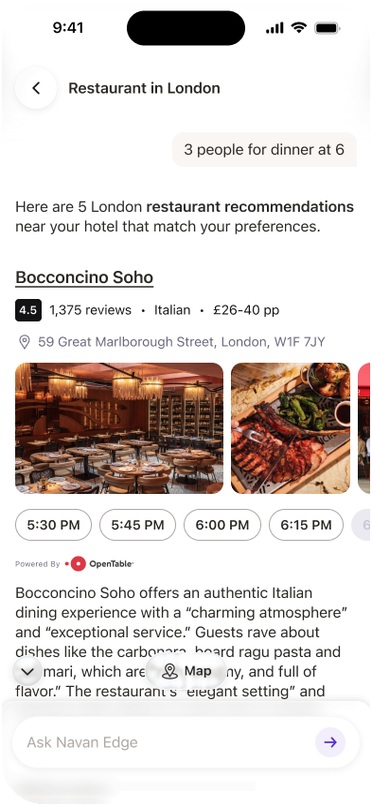
Booking flights and restaurants in a chat
Flights · April 2026
Book a flight inside a conversation.
Restaurants · May 2026
Book a restaurant inside a conversation, in partnership with OpenTable.
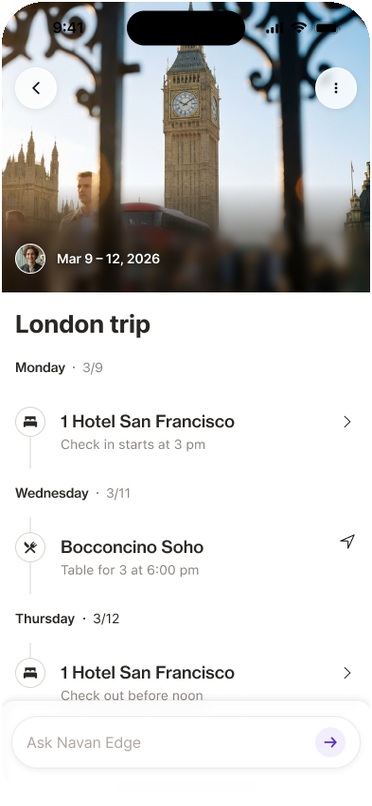
Not one AI assistant. A system of agents.
We built different agents for different situations.
The colleague
When the user is exploring and looking for advice.
- Sounds like
- Efficient, knowledgeable, to the point. The colleague everyone asks to help book trips.
- Feels like
- Someone on my level who happens to be great at this.
The concierge
When intent is clear. Options, details, booking, and anything that changes mid-trip.
- Sounds like
- Composed, service-oriented. Brief but not cold, personal but not performative.
- Feels like
- Someone is handling it for me.
The implicit expert
When we can offer a better path: a stronger option, a personalized reward, advice with backing.
- Sounds like
- Understated, certain, never announcing what it knows. It shows in what gets flagged.
- Feels like
- Someone who knows their stuff, knows me, and cares how the trip goes.
A brand, built alongside the product
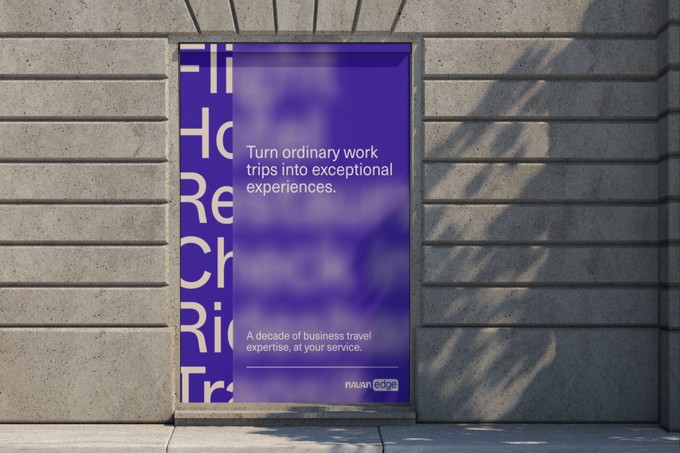
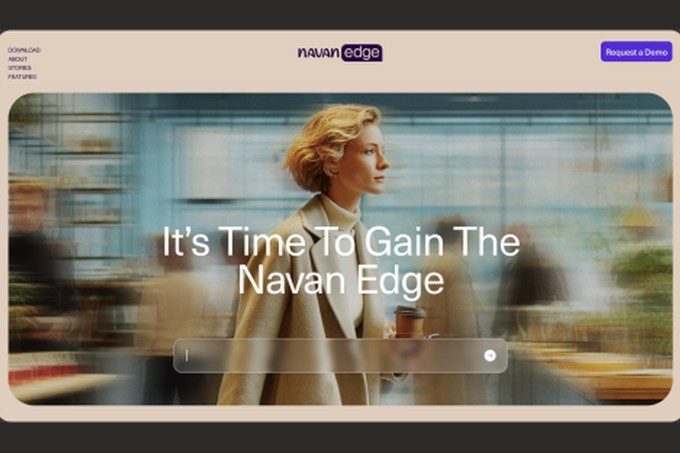
Worked with marketing executives on the Navan Edge identity, a premium sister brand to Navan: edgy, technological, built around the movement of travel, and still human.
What happened after launch
- 6×
- active users
- 30×
- bookings
- ≈5×
- bookings per user
The product did not just get bigger. It got better at turning a user into a booking.